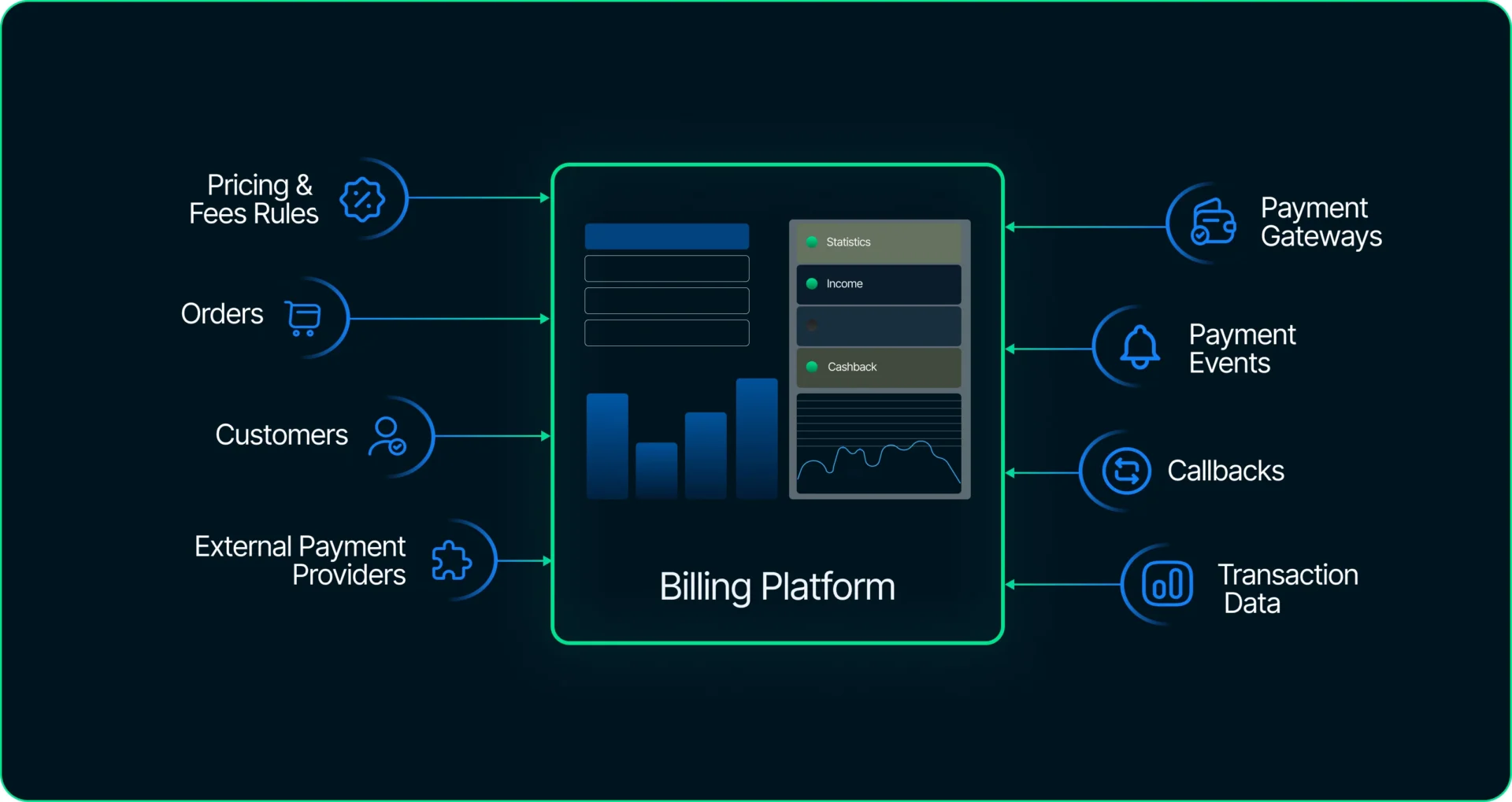
A 9-month journey from fragmented payment processes to unified billing automation software - lessons learned in building enterprise-grade invoice processing systems. Modern retail businesses face a persistent challenge: managing financial flows across multiple channels while maintaining accuracy, speed and regulatory compliance. When off-the-shelf
billing software for small business can't keep pace with growth, companies turn to custom
billing automation software solutions. This case study details how our team at Intelexity Systems built a comprehensive
billing platform, that transformed our client's payment operations.
The Challenge: Why Standard Billing Software Wasn't Enough
Our client, a rapidly growing retail company, came to us with a familiar problem. Their existing
invoicing software for small business had served them well initially, but as transaction volumes increased and payment channels multiplied, cracks began to show.
The accounting team spent hours on manual
invoice processing, reconciling data from multiple sources. Payment acceptance was fragmented across different providers with no unified view. Fiscalization - the legal requirement to report transactions to tax authorities - required manual intervention for each sale. Financial reporting meant exporting data from three different systems and combining spreadsheets.
They didn't need incremental improvements. They needed purpose-built
billing automation software designed around their specific workflows.
Project Scope: Building Billing Automation Software from Scratch
After analyzing the client's requirements, we defined five core objectives for the new
invoice management system:
- Multi-gateway payment integration. The billing system had to accept payments through YooMoney, Sberbank and any third-party processing centers - all through a single interface. This wasn't just about connecting APIs; it meant building an abstraction layer that could normalize different provider responses and handle edge cases gracefully.
- Automated fiscalization. Every transaction needed automatic transmission to the fiscal data operator (FDO) with proper receipt generation. No manual steps, no delays, full compliance with Russian tax regulations.
- Unified order and payment management. Invoice automation software, that handles the complete lifecycle: order creation, invoice generation, balance holds, payment confirmation and order closure. One system, one source of truth.
- Real-time reconciliation. Automated matching of payments to invoices with instant discrepancy alerts. The accounting team needed to see problems in minutes, not discover them during monthly close.
- Comprehensive reporting. Customizable dashboards and export capabilities for finance teams to analyze payment flows, track outstanding balances and generate compliance reports.
Technical Architecture: The Foundation of Reliable Billing Automation Software
We chose a modular architecture that separates concerns while maintaining tight integration where it matters. The technology stack reflects our commitment to proven, enterprise-ready tools:
- Backend: Java + Spring Framework. For a billing platform processing financial transactions, reliability isn't optional. Spring's mature ecosystem provides transaction management, security features and integration patterns we needed out of the box. The framework's extensive testing support was crucial for a system where bugs have real financial consequences.
- Database: PostgreSQL. Financial data demands ACID compliance and robust data integrity. PostgreSQL delivers both while offering the performance characteristics needed for real-time balance calculations and reporting queries.
- Frontend: React. The accounting and finance teams needed responsive interfaces that could display complex data without page reloads. React's component model let us build reusable UI elements for invoices, payment statuses and reconciliation workflows.
- Infrastructure: Docker + Kubernetes. Containerization ensures consistent deployments across environments. Kubernetes orchestration provides the scalability to handle peak transaction loads and the resilience to maintain uptime during component failures.
- Monitoring: ELK Stack. With financial transactions, you need visibility into every operation. Elasticsearch, Logstash and Kibana give us centralized logging, real-time monitoring and the ability to trace any transaction through the entire system.
Key Features of Our Billing Automation Software Solution
Payment Gateway Abstraction Layer
Rather than building direct integrations to each payment provider, we created an abstraction layer, that normalizes the interface. When the client wants to add a new payment method, we implement a single adapter rather than modifying core billing logic. This approach proved its value when the client added a new payment provider six months after launch - integration took two weeks instead of the two months it would have required with tightly coupled code.
Automated Invoice Processing and Lifecycle Management
The
automated invoicing software handles the complete invoice journey without manual intervention. When an order is created, the system automatically generates an invoice, calculates applicable fees and notifies the customer. Upon payment, funds are held until confirmation, then automatically applied to the invoice. If payment fails, the system initiates retry logic and alerts relevant staff.
This
invoice processing automation reduced the accounting team's invoice-related workload by 70%. What previously required three full-time staff members now runs automatically, with humans intervening only for exceptions.
Real-Time Fiscalization
Every completed transaction triggers automatic receipt generation and transmission to the fiscal data operator. The
billing automation software handles the complete fiscalization workflow: formatting data per regulatory requirements, managing the FDO connection, handling retries on transmission failures and storing confirmation receipts.
Before implementation, fiscalization delays averaged 4-6 hours. Now receipts reach the tax authority within seconds of payment confirmation.
Intelligent Reconciliation Engine
The reconciliation module automatically matches incoming payments to outstanding invoices, using multiple criteria: amount, customer ID, reference numbers, and timing. When exact matches aren't possible, the
automated invoice system suggests probable matches for human review rather than failing silently.
Daily reconciliation reports now generate automatically, highlighting exceptions that need attention. Month-end close, which previously took the finance team three days, now completes in four hours.
Notification System
Every significant event - payment received, invoice overdue, reconciliation exception, system error - triggers appropriate notifications to relevant users and systems. The notification engine supports multiple channels (email, SMS, webhook) and allows users to configure their preferences.
Development Process: 9 Months to Production-Ready Billing Software
The project followed an
agile software development methodology with two-week sprints. Our team included a business analyst, who maintained constant communication with the client's finance team, ensuring we built what they actually needed, rather than what we assumed they wanted.
Months 1 - 2: Discovery and Architecture
Deep dive into existing processes, pain point documentation, regulatory requirement analysis. Architecture design and technology selection. Creation of the core domain model for the
billing automation software.
Months 3 - 5: Core Development
Implementation of the billing engine, invoice management and payment gateway integrations. Extensive unit and integration testing - for financial software, test coverage isn't a nice-to-have.
Months 6 - 7: Integration and Fiscalization
Connection to fiscal data operators, end-to-end transaction testing, performance optimization. This phase uncovered edge cases that only appear under production-like loads.
Months 8 - 9: UI, Reporting and Launch
Accounting interfaces, reconciliation tools, custom reporting. User acceptance testing with real finance team members. Gradual rollout starting with low-volume transaction types.
Results: Measurable Impact of Billing Automation Software
Six months after full deployment the numbers tell the story:
Processing time reduction: 85%
What took hours now happens in minutes. Invoice generation, payment processing and fiscalization run automatically through our
billing automation software.
Reconciliation accuracy: 99.7%
Automated matching catches discrepancies that manual processes missed. The remaining 0.3% are genuine exceptions requiring human judgment.
Accounting team efficiency: 3x improvement
The same team now handles triple the transaction volume without additional headcount.
Compliance confidence: 100%
Every transaction is properly fiscalized with full audit trails. Regulatory audits that previously caused weeks of stress now complete smoothly.
Lessons Learned in Billing Automation Software Development
Building custom
billing software taught us several lessons that inform our approach to similar projects:
Domain expertise matters enormously
Financial software requires understanding not just the technology but the business rules, regulatory requirements and edge cases that experienced finance professionals know intuitively. Our business analyst's background in fintech was as valuable as our developers' coding skills.
Testing must be exhaustive
In
billing systems bugs have direct financial consequences. We invested heavily in automated testing, including property-based tests, that generate random, but valid, transaction scenarios. This caught issues that scripted test cases missed.
Plan for change from day one
Payment providers change their APIs. Regulations evolve. Business requirements shift. The modular architecture added initial development time, but paid dividends when we needed to adapt the
billing automation software post-launch.
Involve end users continuously
The accounting team's input shaped every feature. What engineers thought was intuitive often wasn't. Regular demos and feedback sessions prevented building the wrong thing.
When Does Custom Billing Automation Software Make Sense?
Not every business needs
custom software development for billing. Standard
business billing software or
online billing software works well for straightforward use cases. But custom
billing automation software becomes compelling when:
- Your payment flows don't fit standard patterns. Multiple payment providers, complex invoicing rules, industry-specific compliance requirements - these often exceed what packaged invoice software handles well.
- Integration is critical. If billing data needs to flow seamlessly into ERP systems, CRM platforms or custom operational tools, purpose-built integration often outperforms generic connectors.
- Scale is a factor. High transaction volumes with strict performance requirements may exceed the capabilities of SaaS billing solutions, especially when customization is also needed.
- Compliance is complex. Industries with specific regulatory requirements - healthcare, finance, retail with fiscalization - often find that generic solutions require so much customization, that custom development becomes more economical.
Conclusion: The Value of Purpose-Built Billing Automation Software
This project reinforced a principle we see repeatedly in
enterprise software development: the right solution depends entirely on the specific problem. For our client custom
billing automation software delivered transformative results, because it was designed around their exact workflows, compliance requirements and growth trajectory.
The
billing platform now processes thousands of transactions daily with minimal human intervention. The finance team has shifted from data entry to analysis. Compliance happens automatically. And when the business expands into new payment channels or markets, the
billing automation software is ready to adapt.
If your organization struggles with billing complexity that standard software can't address, we'd welcome a conversation about whether custom development makes sense for your situation.
View the full case study or
contact our team to discuss your billing automation software requirements.